
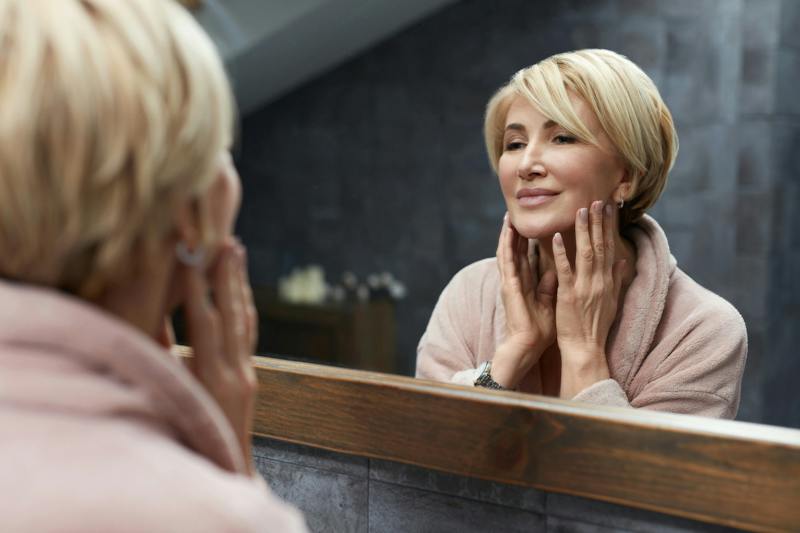
When people think about facial aging, wrinkles are often the first thing that comes to mind. But for many patients, the first noticeable change has less to do with lines and more to do with the shape of the face. The cheeks may seem heavier, the jawline may look softer, or small areas of sagging may begin to appear around the mouth and chin.
These changes can make the lower face look older even when the skin itself does not have many wrinkles. That is because facial aging involves more than the surface of the skin. Over time, the skin loses elasticity, facial volume changes, and the tissues that once supported the cheeks and jawline can gradually shift downward.
The lower face can therefore become one of the most noticeable areas of facial aging. Understanding why can help explain why some patients eventually consider a facelift, while others may benefit from a different approach.
Why Does the Lower Face Change So Much With Age?
Facial aging is a gradual process, and several things are happening at the same time. The skin becomes less elastic and does not bounce back as easily. Collagen and other structural components of the skin change. Facial fat can decrease in some areas while shifting or becoming more prominent in others. Beneath the skin, supporting tissues can also descend.
In the lower face, those changes tend to become especially visible around the cheeks, corners of the mouth, jawline, and chin. Instead of simply seeing more wrinkles, a person may notice that the face has started to look different overall.
That distinction matters. Someone concerned about a softer jawline may not need the same treatment as someone primarily bothered by fine lines around the eyes. Facial rejuvenation is most effective when the treatment addresses the particular changes responsible for the patient's concerns.
What Makes Lower-Face Aging Look Different?
The lower face has several features that can make age-related changes stand out. The jawline provides a strong visual boundary between the face and neck when the underlying tissues are well supported. As those tissues descend and the skin becomes looser, that boundary can become less distinct.
Jowls are one example. They can develop along the lower cheeks as facial tissues shift downward, creating fullness or looseness near the jawline. The folds running from the nose toward the mouth and from the corners of the mouth toward the chin may also become more noticeable.
For some patients, the result is not that the face looks particularly wrinkled. Instead, it may look heavier, less defined, or simply different from the face they recognize from earlier years.
Does the Lower Face Really Age Faster Than the Rest of the Face?
Not necessarily. Facial aging does not follow the same pattern for everyone. Some people notice changes around the eyes first, while others see changes in the cheeks, mouth, jawline, or neck before anything else becomes particularly noticeable.
The perception that the lower face ages faster may come from how multiple changes become visible in the same area. A softer jawline, developing jowls, deeper folds, and changes around the mouth can collectively alter the proportions of the lower third of the face.
By comparison, aging around the eyes may initially be limited to fine lines or a small amount of excess skin. The changes may be noticeable, but they do not necessarily alter the overall shape of the face in the same way.
How Different Parts of the Face Age
| Area | Common Changes | What May Become Noticeable |
|---|---|---|
| Forehead and brow | Changes in skin elasticity and brow position | Forehead lines or a heavier-looking brow |
| Eyes | Excess skin, changes in fat, and skin laxity | Upper-eyelid heaviness, puffiness, or under-eye bags |
| Cheeks | Volume changes and downward movement of facial tissues | Less fullness or definition through the midface |
| Lower face | Skin laxity, tissue descent, and changes in facial volume | Jowls, deeper folds, and a softer jawline |
| Neck | Skin laxity, muscle changes, and changes in fullness beneath the chin | Less definition between the jawline and neck |
These areas are connected, which is why treating one part of the face does not necessarily address every sign of aging. A patient with significant lower-face laxity, for example, may have very different needs from someone whose primary concern is excess skin on the upper eyelids.
Why Jowls Are Such a Noticeable Sign of Aging
Jowls can change the appearance of the entire lower face. Even a relatively subtle amount of sagging can make the jawline look less sharp and can create a gradual transition between the cheeks, jaw, and neck.
They also illustrate why facial aging cannot always be solved by simply tightening the skin. The tissues beneath the skin play an important role in facial contour. When those deeper structures have descended, pulling the surface skin tighter does not necessarily recreate the contours that were present earlier in life.
This is an important consideration in facelift surgery. Dr. Jen Stark's approach focuses on the deeper support structures of the face rather than treating loose skin as the only cause of aging. Her facelift techniques include SMAS plication, SMASectomy, and deep plane facelift techniques, with the approach selected according to the patient's anatomy, skin quality, and goals.
What Happens to the Jawline as the Face Ages?
A youthful jawline is partly defined by a relatively clear transition between the lower face and the neck. As the face ages, that transition can become softer.
Changes in facial tissue position can contribute to jowls, while changes in the neck can further obscure the jawline. The result may be more noticeable from the side profile, particularly when compared with photographs from earlier years.
A facelift can address some of these changes by repositioning the deeper tissues and removing excess skin where appropriate. When aging extends farther into the neck, a neck lift may also be considered. The two procedures can complement one another when both the lower face and neck have experienced significant changes.
What About the Eyes and Upper Face?
The upper face can age in a very different way. The eyes, for example, may develop excess skin or puffiness that makes the face appear tired even when the lower face remains relatively well defined.
Dr. Stark also performs eyelid surgery, or blepharoplasty, to address excess skin, fat, or tissue around the upper and lower eyelids. Eyelid surgery can be performed on its own or incorporated into a broader facial rejuvenation plan when changes around the eyes are contributing to an overall aged appearance.
This is one reason facial rejuvenation is not a matter of choosing a procedure based solely on age. The same person may have significant lower-face laxity but minimal changes around the eyes, while another patient may have the opposite pattern.
Can Skin Treatments Improve an Aging Lower Face?
Skin quality is an important part of how the face looks at any age. Sun exposure, texture, pigmentation, and fine lines can contribute to an older-looking complexion even when the underlying facial structure remains relatively well supported.
Laser resurfacing can address certain surface-level concerns by improving skin texture and tone. However, resurfacing does not reposition sagging facial tissues or recreate a sharper jawline. That distinction is important when deciding which treatment is appropriate for a particular concern.
In other words, improving the surface of the skin and addressing structural changes are different goals. Some patients may benefit from combining treatments when both skin quality and facial laxity are contributing to the overall appearance.
Can Changes Around the Mouth Make the Lower Face Look Older?
Yes. The area around the mouth can change considerably with age. Nasolabial folds may become deeper, lines extending from the corners of the mouth toward the chin may become more noticeable, and changes in the upper lip can alter the proportions of the lower third of the face.
For patients whose concerns are concentrated around the lips rather than significant facial laxity, a lip lift may be part of the conversation. A lip lift is very different from a facelift, but the procedures can sometimes be considered together when multiple aspects of facial aging are present.
The goal is not to make every part of the face look younger independently. A thoughtful facial rejuvenation plan considers how the features relate to one another.
When Is a Facelift Considered for Lower-Face Aging?
A facelift may be appropriate when visible aging is primarily related to laxity and descent of the facial tissues. Common concerns include jowls, loose skin along the cheeks and lower face, softened jawline definition, and deeper folds associated with tissue descent and volume changes.
Dr. Stark's approach is centered on restoring facial structure while maintaining the patient's individual expression. Her practice describes her as a board-certified plastic and reconstructive surgeon, and her training includes General Surgery followed by Plastic and Reconstructive Surgery at St. Joseph's University Medical Center, where she served as chief resident.
Her background also includes formal training in drawing, painting, and sculpting. That artistic background is particularly relevant to facial surgery, where proportion, symmetry, contour, and the relationship between individual features all influence the overall result. More information about Dr. Jen Stark's training and background is available through her physician profile.
Facelift or Neck Lift: Which Area Is Actually Aging?
It is not always obvious where the problem begins when the jawline starts to look less defined. The lower face and neck are closely connected, and changes in one area can make changes in the other more noticeable.
| Primary Concern | Procedure That May Be Considered |
|---|---|
| Jowls and sagging along the lower cheeks | Facelift |
| Loss of definition along the jawline caused by facial tissue descent | Facelift |
| Loose skin extending through the neck | Neck lift |
| Upper-eyelid skin or under-eye bags | Eyelid surgery |
| Fine lines, pigmentation, or certain surface-level skin concerns | Laser resurfacing |
| Changes in upper-lip length or definition | Lip lift |
These procedures are not interchangeable, and not every patient needs more than one. A facial plastic surgery consultation can help identify which changes are actually responsible for the concerns being noticed.
Frequently Asked Questions About Lower-Face Aging
Why does my lower face look older even though I don't have many wrinkles?
Wrinkles are only one part of facial aging. Changes in skin laxity, facial volume, and the position of deeper facial tissues can create jowls, soften the jawline, and change the overall shape of the face without producing a large number of surface wrinkles.
What causes jowls to form?
Jowls can develop as facial tissues gradually descend and the skin becomes less elastic. Changes in facial volume and the supporting structures beneath the skin can also contribute to the loss of definition along the jawline.
Can a facelift improve jowls?
A facelift is designed to address sagging tissues and skin in the face and can improve the appearance of jowls when facial tissue descent is contributing to the problem. Dr. Stark's facelift techniques address deeper facial support structures as well as excess skin.
Will a facelift also improve the neck?
A facelift can improve the jawline and upper portion of the neck, but it does not necessarily address every type of neck aging. When there is more extensive laxity or fullness throughout the neck, a neck lift may be recommended as part of the treatment plan.
Can laser resurfacing fix sagging skin?
Laser resurfacing can improve certain concerns involving the surface of the skin, such as texture and tone. It does not reposition deeper facial tissues or correct significant skin laxity, so it serves a different purpose from facelift surgery.
Is a facelift appropriate at a certain age?
There is no single age at which a facelift becomes appropriate. Candidacy is based on the patient's anatomy, degree and location of facial aging, overall health, skin quality, and goals rather than age alone.
When the Lower Face Starts to Look Different
Aging does not necessarily announce itself with a new wrinkle. Sometimes the first sign is a jawline that no longer looks as defined, a subtle change in the cheeks, or the appearance of jowls that were not there before.
Those changes do not automatically mean that surgery is necessary. They do, however, provide useful information about how the face is changing and what may be contributing to the new appearance.
For patients who are beginning to notice these changes and want to understand their options, a consultation with Dr. Jen Stark can provide a more individualized assessment. A consultation can help distinguish between changes that may respond to skin-focused treatments and those related to deeper facial laxity, while also determining whether a facelift, neck lift, eyelid surgery, or another approach makes sense.
To discuss lower-face aging and develop a treatment plan based on the patient's individual anatomy and concerns, schedule a consultation with Dr. Stark in Thousand Oaks and Westlake Village.
For additional information about the practice and its approach to facial rejuvenation, visit the Dr. Jen Stark homepage.